
The 7 Habits of Highly Effective Revenue Operators

The rise of Revenue Operations is the most significant shift in B2B go-to-market strategy of the last decade. We have finally moved away from the fragmented, siloed days where Marketing Ops, Sales Ops, and Customer Success Ops operated in completely different universes.
Today, RevOps is the engine of predictable growth.
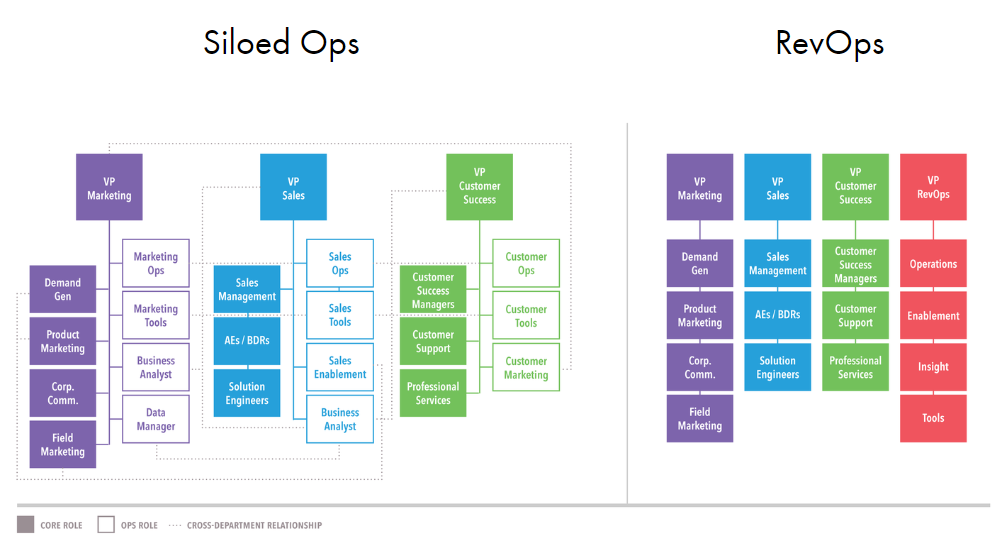
However, as the function matures, a clear divide is emerging between administrators and operators.
Administrators are reactive ticket-takers, constantly putting out fires and building custom CRM reports on demand. Highly effective operators, on the other hand, are proactive strategic partners to the C-suite. They do not just maintain the machine… they architect it, tune it, and steer it.
If you want to evolve from a tactical administrator to a strategic revenue leader, you need to cultivate a specific set of behaviors.
Here are the 7 habits of highly effective Revenue Operators.
1. They Think in Systems, Not Silos
Average operators fixate on a single stage of the funnel. If the sales team is struggling to close, they immediately try to optimize the quoting process or tweak the CRM validation rules.
Highly effective Revenue Operators understand that a business is a complex, interconnected ecosystem. They view the entire customer lifecycle (from the first anonymous website visit to the third-year renewal) as one continuous system.
The Habit in Action:
Embracing the Bowtie Funnel: Effective operators look beyond the traditional “awareness-to-purchase” funnel. They place equal emphasis on the expanding side of the bowtie: onboarding, adoption, retention, and expansion.
Root Cause Analysis: When win rates drop, they do not just look at Sales. They look upstream at Marketing lead quality and downstream at Customer Success churn metrics to find the true root cause.
Process Mapping: Before changing a single line of code or a single CRM field, they map out exactly how that change will impact every other department.
2. They Champion Data Integrity (and Actionability)
“Garbage in, garbage out” is the oldest cliché in operations, but it remains the most critical hurdle. You cannot optimize a revenue engine if the gauges on your dashboard are broken. However, highly effective operators take data a step further: they ensure it is not just clean, but actionable.
They refuse to build reports that just sit in a dashboard gathering dust. They focus on delivering insights that force a decision.
The Habit in Action:
Automated Hygiene: They do not rely on reps to manually clean data. They implement tools and automated workflows for enrichment, deduplication, and standardization.
From Descriptive to Prescriptive: Instead of just reporting what happened (e.g., “We missed pipeline by 20%”), they build models that predict what will happen and prescribe what to do about it (e.g., “We are pacing behind on pipeline; SDRs need to increase outbound activity by 15% this week to hit next quarter’s goals”).
Fewer, Better Metrics: They avoid vanity metrics, ruthlessly paring down dashboards to focus only on the KPIs that matter: Customer Acquisition Cost (CAC), Net Revenue Retention (NRR), Sales Velocity, and Win Rate.
3. They Practice Cross-Functional Empathy
A RevOps professional can design the most elegant, logically sound process in the world, but if the end-users hate it, it will fail. Effective operators know that they are not just managing software; they are managing human behavior.
To build processes that actually get adopted, you must deeply understand the daily friction points, motivations, and pain points of the people doing the work—the Account Executives (AEs), Sales Development Reps (SDRs), Marketers, and Customer Success Managers (CSMs).
The Habit in Action:
Digital Ride-Alongs: They regularly listen to Gong or Chorus calls. They sit in on pipeline reviews and forecasting meetings to hear the reality of the floor.
“Day in the Life” Shadowing: They sit with reps to watch how they actually navigate the CRM, identifying unnecessary clicks, confusing fields, and time-wasting manual data entry.
Designing for the User: They build systems that make the rep’s job easier, not harder. If a new process requires a rep to fill out five new fields, they find a way to automate three of them.
4. They Ruthlessly Prioritize Tech Stack Hygiene
In the modern GTM environment, it is incredibly easy to fall victim to “shiny object syndrome.” There is a SaaS tool for everything, and leadership is often eager to buy a new piece of software to solve a fundamental process problem.
Highly effective Revenue Operators act as the gatekeepers of the tech stack. They understand that every new tool adds complexity, potential integration debt, and a learning curve for the team.
The Habit in Action:
The “Process First” Rule: They refuse to buy software to fix a broken process. They fix the process on a whiteboard first, and then evaluate if technology can accelerate it.
Quarterly Audits: They regularly audit the existing stack for utilization and ROI. If a tool has low adoption or overlaps with another platform’s capabilities, they consolidate or cut it.
Integration over Features: When evaluating a new tool, they prioritize how well it natively integrates with the core CRM over flashy, standalone features. A disconnected tool is a data silo waiting to happen.
5. They Anticipate the Next Bottleneck
Reactive operators wait for the CRO to ask, “Why are our deal cycles getting so long?” Proactive operators spot the elongation in the data three months earlier and bring the solution to the CRO before the question is even asked.
This requires a forward-looking mindset. As a company scales, the systems that got it to $10M ARR will inevitably break on the way to $50M ARR. Effective operators are always looking around the corner.
The Habit in Action:
Capacity Planning: They don’t just look at current quota attainment; they model out headcount requirements, ramp times, and territory carving six to twelve months in advance.
Velocity Tracking: They monitor the conversion rates and time-in-stage for every step of the funnel. If leads start piling up in the “Discovery” stage, they investigate immediately before it impacts closed-won revenue next quarter.
Stress Testing: They ask “What if?” questions. What if our inbound lead volume drops by 20%? What if our largest competitor slashes their prices? They build contingency plans into the operational model.
6. They Master the Art of Change Management
RevOps is ultimately about change management. You are constantly asking people to change how they work, which is inherently uncomfortable. An effective operator knows that rolling out a new tool or process is only 20% technical configuration and 80% communication, enablement, and reinforcement.
The Habit in Action:
Executive Buy-In: They never launch a major initiative without visible, vocal support from the CRO, CMO, or CEO. Leadership must set the expectation that the new process is mandatory.
Phased Rollouts: Instead of doing massive, disruptive “big bang” launches, they utilize beta groups and phased rollouts to catch bugs and build internal champions before a wider release.
The “Why” Behind the “What”: When training the team, they don’t just show them what buttons to click. They explain why this change is happening and, most importantly, what is in it for them (e.g., “This new CPQ tool will save you 45 minutes on every contract generation”).
7. They Align Every Action to Revenue Growth
It is easy to get lost in the weeds of lead routing rules, field mapping, and API errors. But highly effective Revenue Operators never lose sight of their ultimate North Star: driving efficient revenue growth.
They speak the language of the business, not just the language of systems administration. When they propose a project, they do not justify it by saying “it will make the CRM cleaner.” They justify it by demonstrating how it will accelerate sales cycles, increase win rates, or reduce customer churn.
The Habit in Action:
Impact Effort Matrix: When prioritizing their roadmap, they ruthlessly score projects based on their potential impact on revenue versus the effort required to build them.
Speaking CFO: They understand financial metrics. They can articulate how an improvement in the Lead-to-Opportunity conversion rate directly lowers Customer Acquisition Cost (CAC) and improves capital efficiency.
Strategic Boundary Setting: They are comfortable saying “no” to ad-hoc requests from leadership if those requests do not align with the company’s core revenue objectives. They protect their team’s time so they can focus on high-leverage strategic work.
Stepping into Strategic Leadership
Mastering Revenue Operations is not about memorizing Salesforce Trailheads or knowing the intricacies of HubSpot campaigns. While technical aptitude is the baseline, it is not the ceiling.
The transition from a tactical ops administrator to a highly effective Revenue Operator is a shift in mindset. It requires empathy, foresight, rigorous prioritization, and an unwavering focus on the bottom line. By cultivating these seven habits, you stop being the person who simply fixes the machine, and you become the architect of your company’s growth.
👋 Thank you for reading Mastering Revenue Operations.
To help continue our growth, please Like, Comment and Share this post.
I started this in November 2023 because revenue technology and revenue operations methodologies started evolving so rapidly I needed a focal point to coalesce ideas, outline revenue system blueprints, discuss go-to-market strategy amplified by operational alignment and logistical support, and all topics related to revenue operations.
Mastering Revenue Operations is a central hub for the intersection of strategy, technology and revenue operations. Our audience includes Fortune 500 Executives, RevOps Leaders, Venture Capitalists and Entrepreneurs.